



Mutual Funds : Comprehensive Guide
What is a Mutual Fund?
A mutual fund is a collective investment where money from numerous investors is pooled together. This fund is then managed by a professional fund manager, who invests it in a diversified portfolio of financial instruments.
As an investor, you own units in the mutual fund, which represent your share of the fund based on the amount you invested.
1. Understanding NAV (Net Asset Value)
The Net Asset Value (NAV) of a mutual fund unit is akin to the price of a share. It indicates the market value of each unit of the fund, which is the price at which you can buy or sell units. NAV is typically calculated daily, reflecting the market value of the fund’s assets minus liabilities.
The absolute value of NAV (whether it’s 10 or 100) is less important than the fund’s performance. A 10% return on investment will increase the NAV proportionally, whether it starts at 10 or 100. Therefore, focus on the fund’s consistency and performance rather than its NAV.
2. Types of Mutual Funds
Choosing the right mutual fund depends on your investment horizon and financial goals. Here are the main types of mutual funds:
A. Debt Mutual Funds
Debt mutual funds invest in fixed-income securities like bonds and government securities. These funds are generally lower in risk compared to equity funds and aim to provide steady returns while preserving capital.
B. Equity Mutual Funds
Equity mutual funds invest in stocks, making you a partial owner of the companies in which the fund invests. These funds carry higher risk but offer the potential for higher returns. Diversification within the fund helps mitigate some of the risks associated with individual stocks.
C. Liquid Mutual Funds
Liquid mutual funds invest in short-term debt instruments, providing high liquidity. These funds are low-risk and offer slightly higher returns than savings accounts, making them suitable for short-term investment needs.
D. Hybrid Funds
Hybrid funds invest in a mix of asset classes, including debt, equity, and money market instruments. This blend aims to balance risk and return, offering a diversified investment approach.
3. Advantages of Mutual Funds
i. Flexibility
Mutual funds offer various schemes with different minimum investment amounts, frequencies, and withdrawal options, allowing you to tailor your investments to your financial situation.
ii. Liquidity
Open-ended mutual funds allow you to buy and sell units on any business day, with the proceeds typically available within three working days.
iii. Transparency and Safety
Mutual funds provide regular updates and disclosures, including monthly fact sheets and daily NAVs, ensuring you stay informed about your investments. Professional fund managers handle your investments, reducing the uncertainty of managing your funds independently.
iv. Diversification
Mutual funds spread investments across various assets and sectors, reducing the risk associated with concentrating your investments in a single asset or sector.
v. Reduced Transaction Costs
Pooling resources from many investors gives mutual funds bargaining power to reduce transaction costs, similar to wholesale buying.
vi. Professional Management
Professional fund managers with expertise and access to extensive research manage mutual funds, aiming to optimize returns based on market trends and data.
4. How to Invest in Mutual Funds
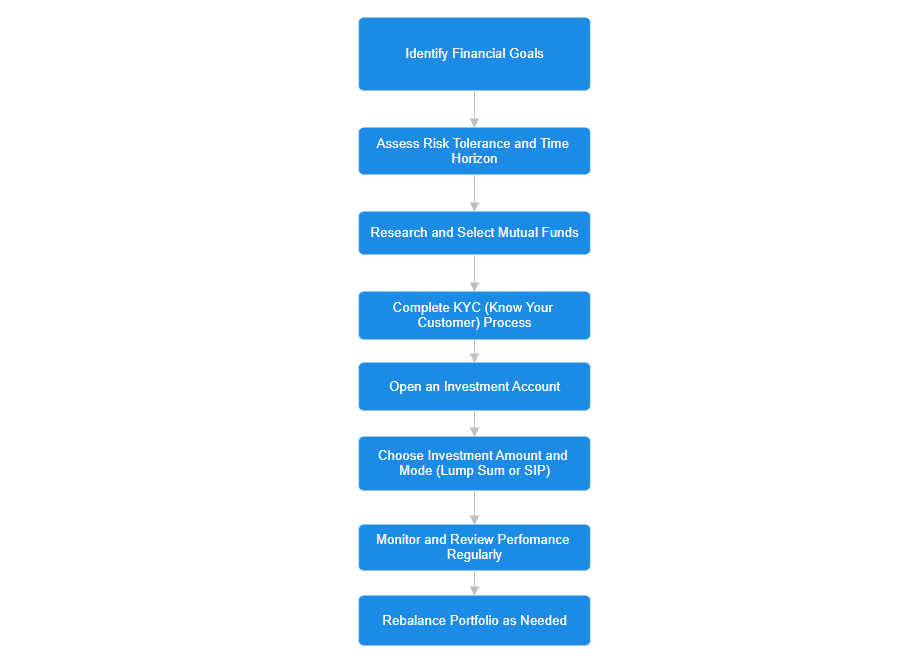
Investing in mutual funds begins with defining your financial goals. Based on your goals and risk tolerance, you can select and evaluate suitable mutual funds. Consider consulting with a financial advisor to ensure your investment choices align with your objectives.
By understanding mutual funds and their benefits, you can make informed decisions to achieve your investment goals and build a diversified portfolio.
Wealth Creation through SIP
What is SIP?
A Systematic Investment Plan (SIP) is a straightforward method of investing in mutual funds, akin to making regular deposits into a bank account. It enables investors to save consistently, fostering disciplined wealth accumulation over the long term, thereby securing a better financial future for you and your family.
Benefits of SIP
Rupee Cost Averaging: By investing fixed sums at regular intervals, SIPs enable investors to buy more units when prices are low and fewer units when prices are high. This strategy averages out the purchase cost over time, eliminating the need to time the market. Refer to the table below to understand how rupee cost averaging works.
Compounding Wealth Effectively: Investing regularly over an extended period harnesses the power of compounding. This means that earnings on investments are reinvested to generate additional earnings, potentially leading to significant wealth accumulation over time.
Goal Achievement: SIPs are ideal for individuals with specific financial objectives, such as funding a child’s education, marriage expenses, or a comfortable retirement. By consistently investing a fixed amount each month, investors can systematically work towards meeting their financial goals.
Convenience and Ease: Initiating an SIP is hassle-free, often requiring just a single ECS (Electronic Clearing Service) instruction to get started. This simplicity makes it accessible to investors looking to build wealth without the complexities of active trading.
The Right Way to Generate Long-Term Wealth through SIP
Choose Growth Option: Opting for the growth option allows your investment to benefit fully from compounding over the long term. As Albert Einstein famously said, “Compound interest is the eighth wonder of the world.”
Select the Right Tenure and SIP Amount: Tailor the duration and monthly SIP amount to align with your financial goals. Consistency is key; continue your SIP contributions through market fluctuations to maximize the advantage of rupee cost averaging.
By following these principles, investors can effectively utilize SIPs as a strategic tool for wealth creation, ensuring financial stability and growth over the years.